

Blog
Mobile vs. Portable Rock Crushers: Choosing the Right One
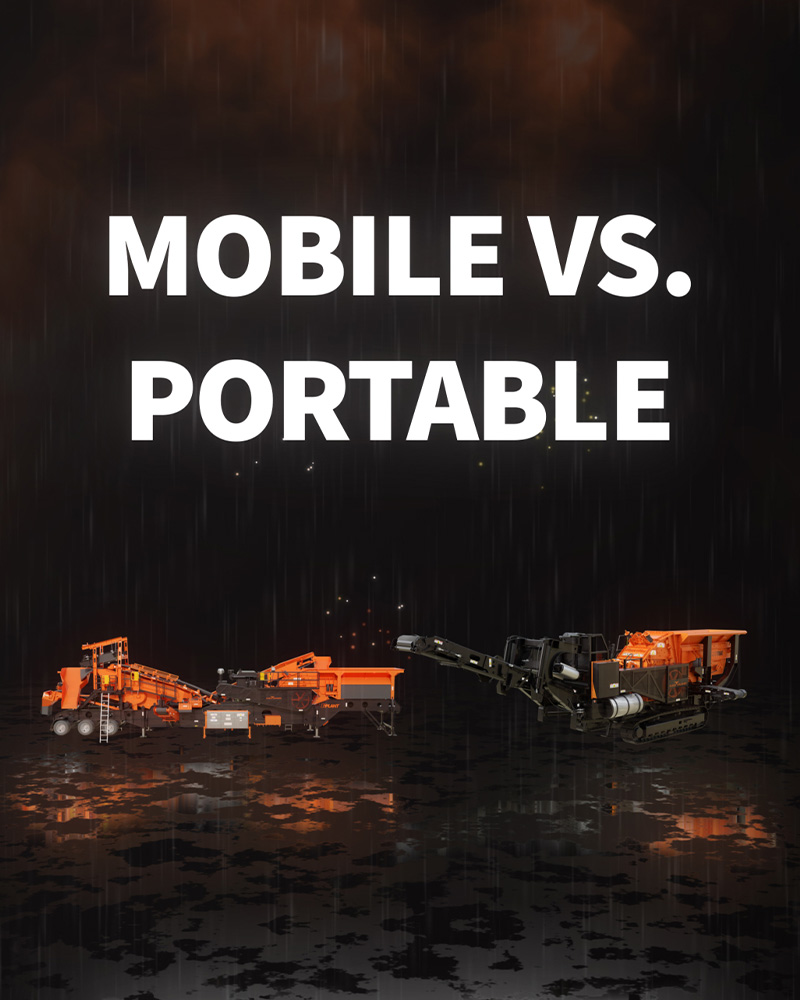
Mobile vs. Portable Rock Crushers: The Pros and Cons
Different material processing jobs present unique challenges, and with the current world market, buying the right crushing equipment is critical to keeping your company up and crushing. One of the first questions people often ask about crushing equipment is whether they should buy a portable rock crusher or a mobile one.
Although these styles of rock crusher plants may appear similar, their distinctions could impact the profitability of your business and deserve a closer look. Here, we explore the key differences between mobile and portable rock crushers, helping you determine which type best suits your specific crushing needs.
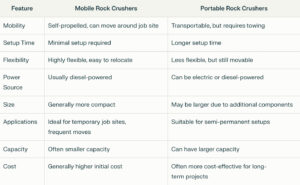
Comparing Mobile vs. Portable Rock Crushers: At a Glance
Mobile Rock Crushers
Mobile rock crushers are specialized equipment used in mining and construction industries to break down large rocks into smaller pieces. Here’s an overview of mobile rock crusher advantages and disadvantages:
Pros:
- Self-propelled design significantly reduces time and labor required to move machines between job sites
- Track-based mobility allows navigation of difficult terrain that wheeled units struggle with
Cons:
- Complex mobile plants (especially those with screens on discharge conveyors) often require partial disassembly before relocation
- Compact design results in minimal clearance, making maintenance and servicing difficult
- Compromised distance between crusher discharge and plant belt
- Limited space and smaller feed hoppers compared to portable plants lead to reduced production capacity
- Transportation challenges may require specialized trailers or multiple loads for larger units
—
Portable Rock Crushers
Portable rock crushers offer an alternative to mobile units with their own set of advantages and limitations. Here’s what you should know about portable rock crusher benefits and drawbacks:
Pros:
- Superior production capacity generates higher volume of end products than comparable mobile plants
- Maximized space design allows steel and large-volume materials to pass efficiently onto the plant discharge belt
- Open design facilitates easier maintenance, reducing downtime
- Versatile screening capabilities–can feature two or three-deck screens to produce multiple products simultaneously
Cons:
- Generally require tractors for movement around job sites
- Larger portable plants typically need partial disassembly for transport (hopper feeder, magnet, etc., may need separate trailers)
- Some specialized models like RapiDeploy® plants are available as single-pull units
Frequently Asked Questions About Mobile vs. Portable Rock Crushers
What are the main differences between mobile and portable rock crushers?
Mobile crushers are self-propelled and can move around the job site, while portable crushers require towing for transportation.
Which type is better for frequently changing job sites?
Mobile rock crushers are generally better suited for projects that require frequent relocation due to their self-propelled nature and quick setup time.
Are portable crushers less efficient than mobile crushers?
Not necessarily. Portable crushers can be just as efficient and sometimes offer larger capacities, making them ideal for longer-term projects.
Can both types of crushers handle the same materials?
Yes, both mobile and portable crushers can process a wide range of materials, including rock, concrete, and asphalt, depending on the specific model and configuration.
How do I choose between a mobile and a portable rock crusher?
Consider factors such as the frequency of relocation, project duration, site conditions, and required capacity. Consult with a crushing equipment expert to determine the best option for your specific needs.
Find the Right Rock Crusher with Eagle Crusher
When it comes to mobile vs. portable rock crushers, it’s crucial to consider your business needs and applications to select the right one. Ready to find the perfect mobile or portable rock crusher for your project? Contact Eagle Crusher today, or an authorized dealer, for expert advice and a free consultation. We’re here to answer your questions and help you find the best equipment for your site!