

Blog
Optimizing Your Impact Crusher
Optimizing Your Impact Crusher: A Guide to Impact Crusher Adjustment and Maintenance
The crushing market caters to a wide range of material processing industries, such as aggregate, asphalt, and concrete, as well as demolition recycling, that handle an even wider range of materials, including limestone, concrete, and gravel, among others. Yet, all crusher operators share a common goal: to process materials at the most cost-effective rate.
Given the number of industries and materials, it can quickly become overwhelming to determine the best way to optimize a horizontal impact crusher, given the many variables that arise. However, from a fundamental perspective, it’s beneficial for operators to simply focus on the apron positions of their impactors. Proper impact crusher adjustment and regular maintenance are key strategies for increasing crusher productivity and maximizing your return on investment.
Let’s review essential techniques for adjusting impact crusher aprons and maintaining critical components to keep your operation running at peak efficiency.
Understanding Impact Crusher Adjustment: The Role of Apron Positioning
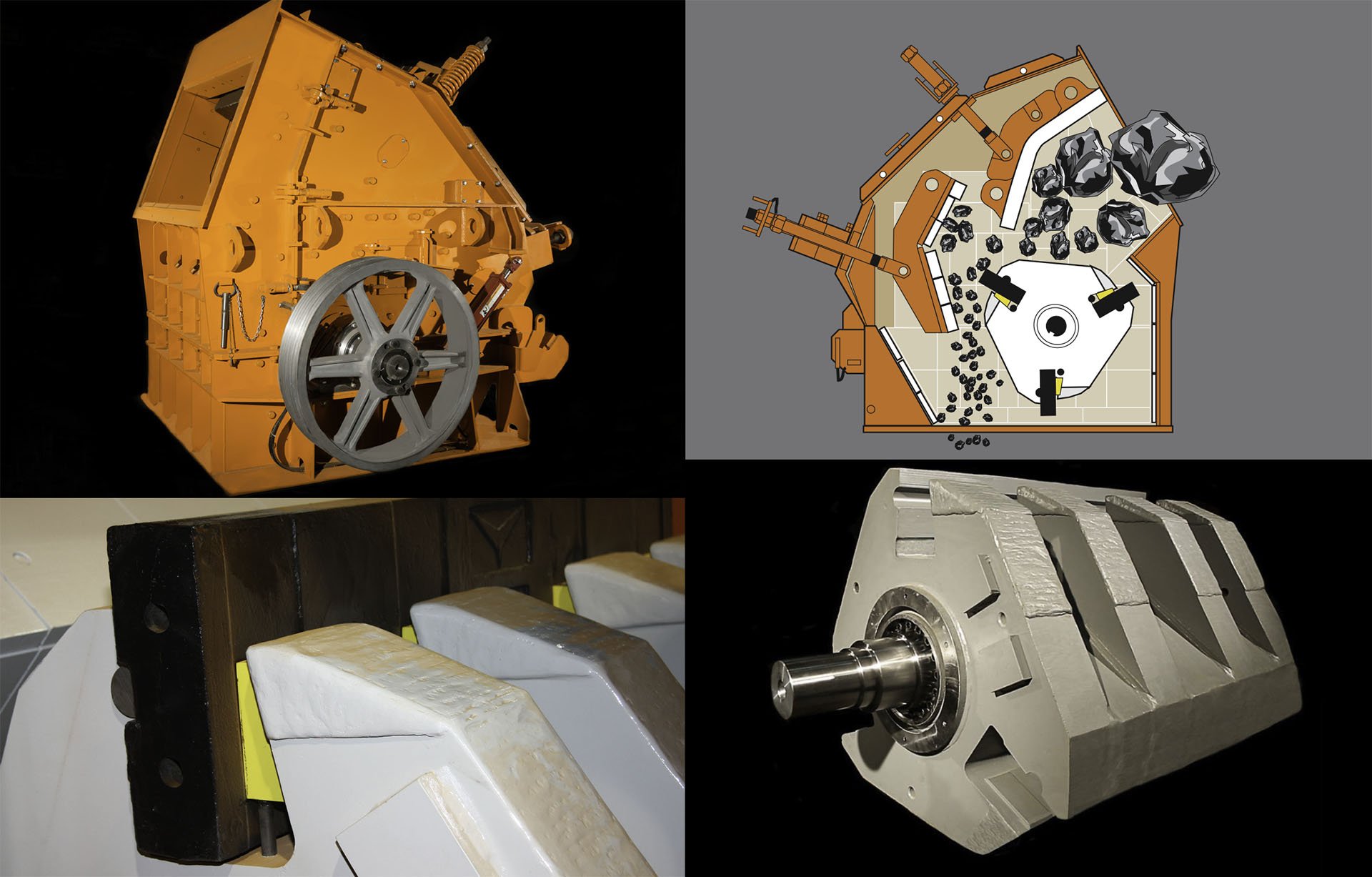
When a horizontal impact crusher is processing material, the aprons inside serve as supplemental points of impact as the material is smashed against them by the rotor’s blow bars. To ensure an impact crusher is operating at its most productive rate, it is valuable to take the time to configure the primary and secondary aprons so that they are working in tandem efficiently.
The 3:1 Rule for Adjusting Impact Crusher Aprons
When adjusting impact crusher aprons, it is recommended to arrange them according to the desired output size of the material being processed by the impactor. A good rule of thumb for reducing material size is 3:1 from when it strikes the primary apron to its eventual exit, and the primary and secondary aprons should work together to facilitate this gradual reduction.
In practice, it is best to work backwards from the desired output size using the 3:1 rule of thumb. If the desired output size is 2-inch minus, it is recommended that the secondary apron is positioned to allow for that same size between it and the highest point of the rotor. Then, the primary apron is positioned to allow for 3 times that amount, so in this instance, the primary apron would be set to a 6-inch gap.
Why Proper Apron Adjustment Matters
Each of these impact crusher adjustment steps is taken to ensure that material is moving through the impact crusher as efficiently as possible and passing through the screen on its first pass, preventing additional crushing. Keeping the impactor free of clogs and reducing the need for second or third passes through the crusher will increase tonnage per hour and, consequently, profits.
Because primary aprons require wrenching to adjust, they are often left in their widest position, leaving the secondary apron to bear the full brunt of the impact job; this makes the impactor susceptible to clogs and unnecessary wear. It is worth the time to adjust the primary apron into its optimal position to avoid unnecessary costs and achieve maximum throughput.
Impact Crusher Maintenance: Essential Practices for Peak Performance
Another way to optimize an impact crusher is to invest in regular maintenance, ensuring that the pieces and parts remain in good working condition. Proper impact crusher maintenance is critical for increasing crusher productivity and extending equipment life.
Monitoring and Adjusting for Blow Bar Wear
For instance, as blow bars wear, the gap between the aprons and blow bars grows, and aprons should be repositioned to account for this discrepancy. Regularly adjusting your impact crusher in response to wear patterns ensures consistent material reduction and optimal throughput.
Maintaining Blow Bars and Liners
In addition to avoiding widened gaps, maintaining and replacing blow bars and liners ensures more effective crushing; when everything is new, square, and flat, materials are more likely to break cleanly. For operators processing more abrasive materials, it is important to check parts more frequently as part of your maintenance routine.
Belt Tension and Drive System Maintenance
It can also be crucial to monitor belt tension and the condition of drive belts in order to ensure that the impactor’s rotor is moving at an optimal speed. If belts are loose or worn, slipping can occur, reducing how effective the rotor is for crushing. Equally, the motor itself can be considered the heart of the crusher and should be maintained appropriately.
Key Maintenance and Adjustment Checklist for Increasing Crusher Productivity
| Maintenance Task | Frequency | Impact on Productivity |
|---|---|---|
| Adjust primary and secondary aprons | As needed based on output requirements | Prevents clogs, reduces multipass crushing |
| Inspect and replace blow bars | Regular intervals (more frequent for abrasive materials) | Ensures clean breaks and efficient crushing |
| Check and adjust apron gaps for blow bar wear | After blow bar maintenance | Maintains optimal material flow |
| Monitor belt tension and condition | Weekly or bi-weekly | Prevents rotor speed loss and slipping |
| Inspect liners for wear | Regular intervals | Improves crushing effectiveness |
| Service motor and drive system | Per manufacturer recommendations | Ensures consistent power delivery |
Expert Support for Impact Crusher Adjustment and Maintenance
Interested in fine-tuning your horizontal impact crusher to guarantee that it’s running at an optimal rate? Contact our service department for expert guidance. Likewise, we recommend that your crushing team contact our parts department so that the pieces and parts of your impactor remain in good condition for processing the job at hand.
After all, your business profits when your impact crusher is operating at its best through proper maintenance and regular adjustments. For complete UltraMax® Impactor product specifications, please visit its product page.