

Blog
Top 5 Frequently Asked Service Questions
Service Questions with John: Top 5 Frequently Asked Questions
It’s been a year since John stepped into the role of Service Manager. Throughout this time, he has established relationships with various authorized dealers and customers by answering their burning crusher questions. While answering these questions, he noticed several questions were recurring. To celebrate his first year as Service Manager, join John as he answers the top five frequently asked questions he’s received.

- Why is my clutch fusible plug leaking fluid?
- Your impactor may be getting overloaded and therefore overheating the clutch. The plug has a solder compound in it so that if the fluid in the clutch gets too hot, the fluid will leak out. This is done to prevent overheating and the possibly of causing permanent damage to the clutch.
- Another solution would be to learn the proper flow of material for your machine to avoid overloading your impactor. Overloading your impactor causes a variety of issues, so it’s important to start with good practice to avoid any unnecessary downtime.
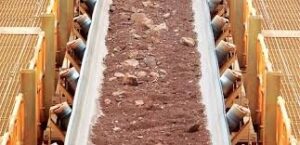
An example of good material flow.
- Why isn’t my machine running evenly? Why are my conveyor belts wearing unevenly?
- One of smallest differences that can cause significant issues in your machine is your machine not being level. If your machine is not level, it will cause material to shift and not run evenly through the plant. This can lead to belts leaking materials, flashings being worn out, wear plates and blow bars wearing unevenly and will affect the performance of the feeder and screen.
- Why is there a gap in the flashing?
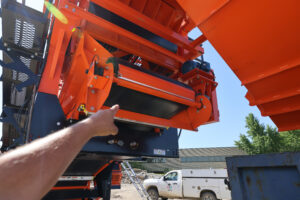
- Flashing is adjusted to the belts when the unit is built and tested in the factory. Once material is on the belts, they have weight added onto them, causing the belt to sag. That is why you see gaps between the belts and flashing. After your first couple of runs, the skirtboard clamps will need to be loosened, and the flashing adjusted accordingly.
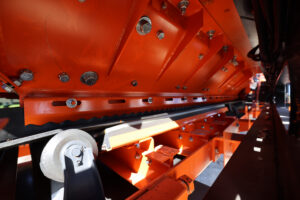
- Flashing is adjusted to the belts when the unit is built and tested in the factory. Once material is on the belts, they have weight added onto them, causing the belt to sag. That is why you see gaps between the belts and flashing. After your first couple of runs, the skirtboard clamps will need to be loosened, and the flashing adjusted accordingly.
- Why did my feeder shut off, and my code says low voltage? Is it because there’s too much material on my screen?
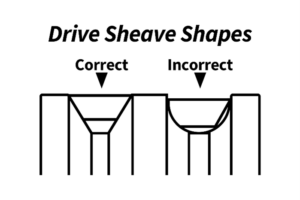
- When it comes to the feeder shutting off, most of the time the drive belt just needs to be tightened or replaced. If the drive belt looks to be good, a worn-out drive sheave could also cause a low voltage code.
- When it comes to the level of material on your screen and feed issues, it’s important to adjust the feeder belt speed to accommodate the screen. Once the machine is up and crushing, watch the material flow on the belts and screen. If there seems to be a small amount of material on the belts and the screen isn’t loaded, you can turn the feeder up to feed more material to the impactor. On the other hand, if the belts look overloaded and screen is backing up or getting material over the sides turn the feeder down to decrease the flow.
- Why does one blow bar have more material above the locking rod pocket when I pull them to flip?
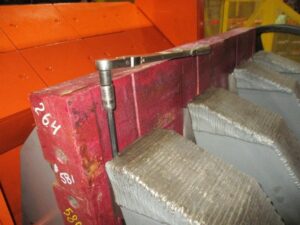
- If there is extra material in the pocket, it might have been from the wedge being loose. When replacing the blow bars, you need to tighten the wedge screws in each wedge. When flipping or replacing the blow bars, do not torque and insert set screw and glue at first. Once everything is properly set, and the lid is properly closed, turn on the crusher and let it get up to speed. Doing this allows the blow bars to “seat” or pull out as far as they can against the locking rod. If the bar moves when the impactor is started, you may hear a loud bang. That is the bar moving into place as the rotor gets up to speed. After it has been run at full speed for a little bit, follow the proper lock out / tag out procedures prior to opening the lid again. At this point, retighten the wedge bots and torque to the recommended setting.
- As a side note, when you insert the set screws, you can insert a small amount of paper towel to help keep the hex in the cap screw from filling with glue.
- For more information about flipping blow bars, check out this previous Service Question with James.
Knowing Who to Call
The last year of being in the service manager position has been an interesting year. John spent the previous 12 years as Eagle Crusher’s Assembly Supervisor, spent time as the assembly team leader, and helped build impactors and jaws for several years. Going from the various positions, he has had the opportunity to learn even more about the equipment Eagle Crusher builds. Throughout this past year, John has been able to go to jobsites with the service technicians to get some hands on in the field experience to accentuate this experience in the shop.
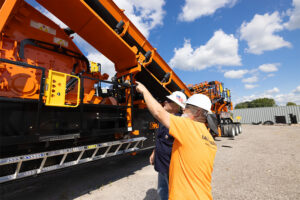
“In the areas I don’t excel in, on the service side, I have listened and have learned a lot in the last year and know that I still have a lot to learn. Working with our service technicians, I am also learning from them, and I am happy to join you in your journey to learning more about rock crusher maintenance.”
Looking back at the past year, it has been a year of learning not only for John as the new service manager, but for everyone following along on this “Service Questions” journey. It’s important to always stay curious and ask questions before servicing your machine instead of causing unnecessary downtime.
When you have questions or concerns about the operation of your machine, it’s important to know the resources available to you to find that answer. If you cannot find the answer you’re looking for in your owner’s manual, you can reach out to your local, authorized dealer or reach out to Eagle Crusher’s Service Team.