

Blog
How to Handle Crushing Concrete With Rebar and Metal Contaminants
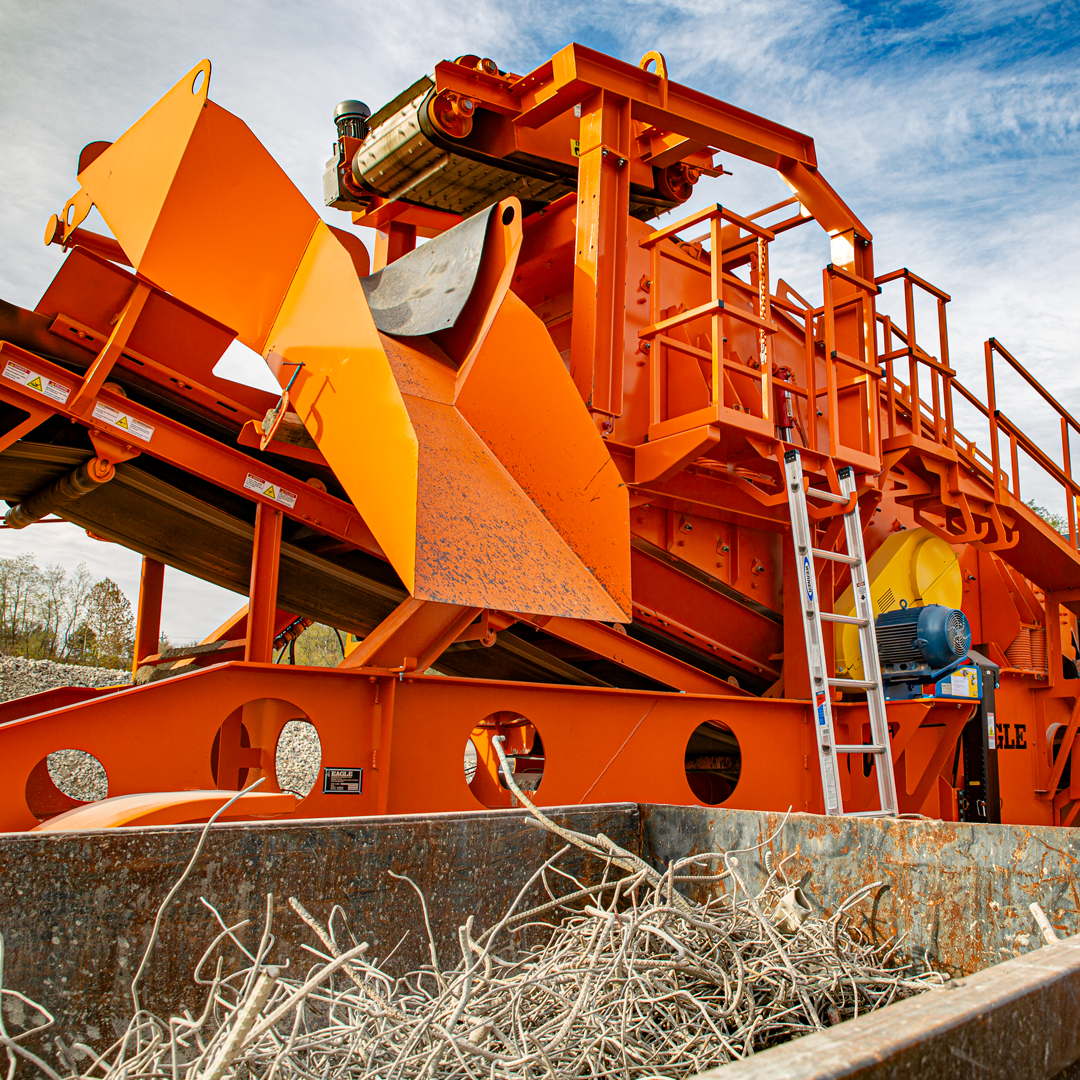
Construction and demolition recycling has transformed the aggregate industry, diverting millions of tons of concrete from landfills annually. This sustainable approach saves companies and taxpayers significant costs while providing quality recycled aggregate for new construction projects. However, one persistent challenge faces every concrete recycler: managing rebar and metal contaminants during the crushing process.
The Challenge of Crushing Concrete With Rebar
Most horizontal shaft impactors (HSI) and jaw crushers can handle appropriately sized rebar without major issues. However, embedded metal reinforcement still poses risks that every operator should understand and plan for.
Processing reinforced concrete presents several operational challenges:
- Conveyor Belt Damage: Sharp rebar ends can pierce conveyor belts, causing costly downtime and repairs.
- Equipment Jams: Rebar can jam up open-rotor impactors and jaw crushers, halting production.
- Rotor Entanglement: In some crushers, rebar can become twisted within the rotor assembly.
- Product Contamination: Metal pieces mixed with crushed aggregate reduce material quality and marketability.
These risks are why proactive rebar management is essential for efficient concrete recycling operations.
Removing Rebar From Concrete: Best Practices
Pre-Crushing Rebar Management
Many construction and demolition (C&D) recyclers sort out uncrushable material before feeding concrete into production. This pre-screening step catches problematic rebar that exceeds your equipment’s capabilities:
Remove rebar that is:
- Longer than your crusher’s feed opening
- Too thick in diameter for your equipment to handle safely
- Excessively tangled or clustered
- Attached to large chunks that create handling hazards
However, some rebar can safely enter the crusher depending on its size and your equipment’s design. Producers should understand their specific crusher’s capabilities and monitor operations closely to identify any emerging issues.
Post-Crushing Metal Separation
Even when crushing concrete with rebar goes smoothly, you’ll need effective methods for removing rebar in the discharge material. This is where magnetic separation becomes essential. Magnets effectively remove rebar and metal contaminants from the material stream after crushing, ensuring clean final products.
Magnetic separators are strategically positioned along conveyor belts in your crushing system. As processed material moves along the belt, the magnet pulls ferrous metals (including rebar fragments) out of the aggregate stream.
Benefits of magnetic separation:
- Produces cleaner, more marketable recycled aggregate
- Protects downstream equipment from metal damage
- Separates valuable scrap metal for resale
- Reduces manual sorting labor requirements
Producers typically configure these magnets to pull metal directly into adjacent dumpsters, making relocation and transportation efficient. The separated rebar can then be sold as scrap metal, creating an additional revenue stream from your recycling operation.
Choosing the Right Concrete Recycling Equipment
Not all crushers handle rebar equally. When selecting concrete recycling equipment, consider:
- Rotor Design: Solid-steel rotors resist rebar entanglement better than open-rotor designs, reducing jamming incidents and maintenance requirements.
- Feed Opening Size: Larger feed openings accommodate concrete chunks with embedded rebar more effectively, reducing pre-processing requirements.
- Crushing Chamber Configuration: Properly designed chambers allow rebar to pass through without damaging critical components or creating blockages.
- Magnet Integration: Equipment designed with magnetic separation in mind streamlines removing rebar from concrete and produces cleaner products.
Optimize Your Concrete Crushing With Eagle Crusher
Eagle Crusher’s concrete recycling equipment is engineered specifically for the challenges of processing demolition material. Our solid-steel rotor design, robust construction, and compatible magnetic attachments help you efficiently process rebar-contaminated concrete while producing quality recycled aggregate.
For more information on managing metal contaminants and magnet attachment options for your operation, contact Eagle Crusher today. We’ll help you find the right equipment that handles crushing concrete with rebar efficiently.